Effective Diabetes Management Strategies
Learn about the latest approaches to diabetes management, including lifestyle modifications, medication options, and monitoring techniques for better blood sugar control.
Diabetes management requires a comprehensive approach that combines medical treatment with lifestyle modifications. Effective management can help prevent complications and maintain quality of life.
Understanding Diabetes
Diabetes is a chronic condition that affects how your body turns food into energy. With diabetes, your body either doesn't make enough insulin or can't use it as well as it should.
Types of Diabetes
Type 1 Diabetes
An autoimmune condition where the body attacks insulin-producing cells in the pancreas. Requires insulin therapy.
Type 2 Diabetes
The most common type, where the body becomes resistant to insulin or doesn't produce enough insulin. Often related to lifestyle factors.
Gestational Diabetes
Develops during pregnancy and usually resolves after childbirth, but increases risk of Type 2 diabetes later.
Key Management Strategies
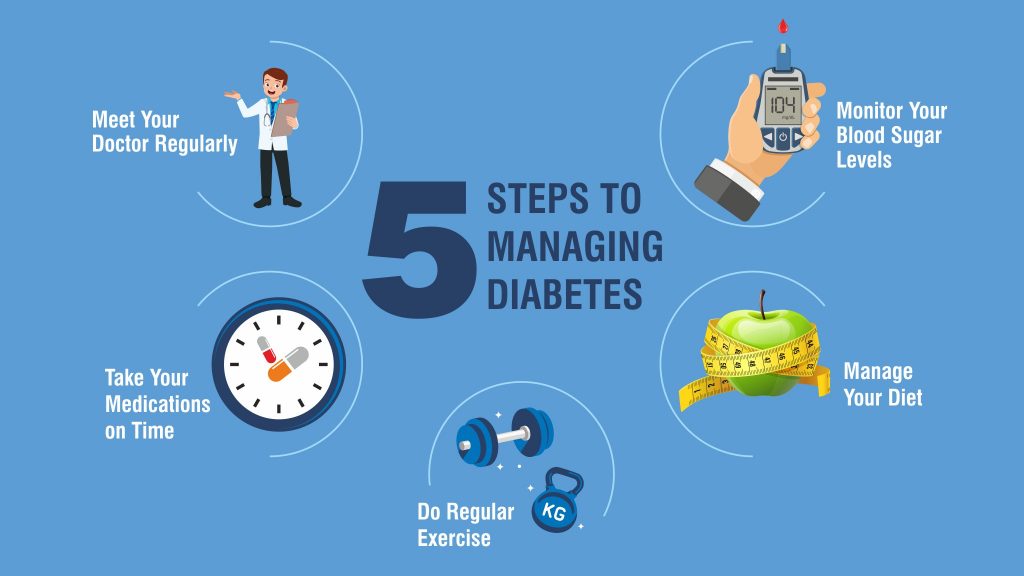
1. Blood Sugar Monitoring
- Regular blood glucose testing
- Continuous glucose monitoring (CGM) for some patients
- Understanding target ranges
- Keeping a log of readings
2. Medication Management
- Taking medications as prescribed
- Understanding how medications work
- Regular medication reviews with healthcare provider
- Proper insulin administration if needed
3. Dietary Management
- Carbohydrate counting
- Balanced meals with proper portions
- Regular meal timing
- Limiting processed foods and added sugars
4. Physical Activity
- At least 150 minutes of moderate exercise weekly
- Strength training 2-3 times per week
- Monitoring blood sugar before and after exercise
- Staying hydrated during activity
Lifestyle Modifications
Stress Management
Stress can affect blood sugar levels. Techniques like meditation, deep breathing, and regular exercise can help manage stress.
Sleep Quality
Poor sleep can affect blood sugar control. Aim for 7-9 hours of quality sleep per night.
Weight Management
For people with Type 2 diabetes, even modest weight loss can improve blood sugar control.
Complications Prevention
- Eye care: Regular eye exams to detect diabetic retinopathy
- Foot care: Daily foot inspection and proper footwear
- Dental care: Regular dental check-ups
- Kidney monitoring: Regular kidney function tests
- Heart health: Managing blood pressure and cholesterol
Technology in Diabetes Management
- Continuous glucose monitors
- Insulin pumps
- Mobile apps for tracking
- Telemedicine consultations
When to Seek Medical Attention
Contact your healthcare provider if you experience:
- Persistently high or low blood sugar
- Signs of diabetic ketoacidosis (DKA)
- New or worsening symptoms
- Difficulty managing your diabetes
Effective diabetes management is a lifelong commitment that requires education, support, and regular medical care. Working closely with your healthcare team can help you achieve optimal blood sugar control and prevent complications.